Hello everyone, this is Dr. Stela Heisler. As a dentist specializing in dental aesthetics, I see how dental veneers have become one of the most sought-after aesthetic treatments in dentistry in recent years. These are thin veneers, usually porcelain veneers or composite veneers, bonded to the front surface of the teeth. They allow for a dramatic improvement in smile appearance, correcting aesthetic flaws such as broken, cracked, stained, or unaesthetically gapped teeth.
Recently, I am encountering more and more patients torn between treatment in Israel and “dental tourism” to Turkey and other countries, where dental treatments are offered at significantly lower prices. Many are drawn to promises of considerable financial savings alongside a pleasant vacation in a foreign country. But is it really such a good deal? In this article I will share my professional experience and explain why it is worth thinking twice before flying abroad for dental veneers, and why I believe quality treatment in Israel is the right investment for you.
The Temptation of Dental Veneers in Turkey
As a dentist, I fully understand the temptation of dental treatments in Turkey. The truth is that the main reason is almost always price. The cost of dental veneers in Turkey can be 30% to 70% lower than in Israel, depending on the clinic and the type of veneer. The price differences stem primarily from lower operating costs in Turkey, including lower salaries for medical staff and lower expenses on equipment and infrastructure.
Every week I meet patients who are tempted by “all-inclusive” packages they have seen online, which include not only the treatment itself, but also flights, airport transfers, hotel accommodation, and even sightseeing tours. These offers do sound appealing – receiving apparently quality dental treatment while enjoying a pleasant vacation.
The extensive advertising on social media, with impressive “before and after veneer photos”, makes the idea even more attractive. Tens of thousands of people are exposed to photos of perfect smiles and testimonials from satisfied patients, creating the sense that this is the ideal solution. But from my professional experience, behind the scenes of the perfect photos and apparently worthwhile packages, quite a few problems are lurking that are worth knowing about before buying a plane ticket.
The Risks and Disadvantages of Dental Veneers in Turkey
Inferior Material Quality
As a specialist in the field, I can say with certainty that one of the main reasons for the low prices in Turkey is the use of cheaper materials. At my clinic I use only the world’s leading materials, which meet strict standards – but in Turkey that is not always the case. Over the years I have treated a large number of patients who returned from Turkey with veneers that cracked, broke, or lost their shine within a relatively short time. In many cases, the lifespan of these veneers is significantly shorter – sometimes less than two or three years, compared to 15-20 years with quality veneers.
Lack of Long-Term Medical Follow-Up
As a dentist, I know that when performing a complex dental treatment such as dental veneers, long-term medical follow-up is essential. At my clinic, patients return for periodic check-ups and receive immediate attention in the event of a problem. In contrast, after treatment in Turkey, the patient returns to Israel without the possibility of regular follow-up with the same dentist who performed the treatment. I see many such cases, and often I do not even have complete documentation of what was done there to help resolve the problem.
Language and Communication Problems
As a dentist, I know how critical good communication between patient and doctor is to the success of treatment. Many patients have returned to me from Turkey and reported that although the clinics spoke basic English, there was significant difficulty in explaining their expectations or understanding the doctor’s explanations. In the field of dental veneers, where aesthetics are so important, such misunderstandings frequently lead to great disappointment with the result.
Overly Rushed Treatment
One of the prominent disadvantages of dental tourism is the need to concentrate all treatment within a very short timeframe – usually one week to ten days. At my clinic, the dental veneer process is spread over several appointments across a few weeks, allowing me to ensure that each stage is completed perfectly. In Turkey, the pressure to finish treatment before the patient returns to Israel leads to shortcuts and insufficient attention to important details.
I see that due to the focus on the immediate aesthetic result, overall oral health is not always adequately addressed. Unfortunately, I have treated many cases of gum inflammation and root problems following veneers done abroad – problems that can lead to tooth loss in the long term.
Difficulty Handling Complications
As a dentist in Israel, I frequently encounter patients who come to me with problems involving veneers they had done in Turkey. Their options are limited:
- Return to Turkey for repair – an expensive and impractical solution in most cases.
- Consult a dentist in Israel – many of my colleagues are hesitant to treat problems created by procedures performed elsewhere, or they charge full price for the treatment, which cancels out the original savings.
- Live with the problem unsolved – a situation that may worsen over time and cause additional health damage.
I always try to help every patient who comes to me, even if the original treatment was not done at my clinic, but the solution is often more complex and expensive than it would have been had the treatment been done correctly from the outset.
The Security and Diplomatic Challenge in Turkey
Another important topic worth mentioning is the significant change in relations between Israel and Turkey in recent years. Unfortunately, Turkey has recently become a less friendly country for Israelis, as can be seen from the warnings periodically published by the National Security Staff.
Quite a few patients have told me about feelings of discomfort and sometimes even hostility they experienced during their last visit there. The tense political climate may affect the treatment of Israelis, and in the event of a medical problem or treatment complication, this situation could make it harder to receive an adequate response.
Additionally, in the event of a sudden deterioration in the security situation or flight route closures (as has happened more than once in recent years), a patient who has started treatment in Turkey may find themselves unable to complete the treatment or receive emergency care if needed. This is another important consideration when deciding where to undergo a significant and costly dental procedure such as veneers.
The Advantages of Dental Veneers in Israel
Expertise and High Professional Standards
Israel is known worldwide as a leader in the field of dentistry, and I am proud to be part of this professional community. As an Israeli dentist, I underwent extensive and comprehensive training, including not only the basic dental studies but also specific specializations in dental aesthetics. I invest heavily in professional development and regularly update my knowledge of the latest techniques and materials in the field – all to ensure my patients receive the most advanced treatment available.
Strict Supervision and Regulation
At my clinic, as in all dental clinics in Israel, we are subject to strict regulation by the Ministry of Health, including periodic inspections and compliance with high standards of hygiene, safety, and treatment quality. I see this as an enormous advantage for my patients. From my experience, in many clinics in Turkey – especially those aimed at dental tourists – oversight may be less rigorous. All materials and dental equipment at my clinic meet the strictest standards, ensuring my patients receive high-quality and safe treatment.
Continuous Follow-Up and Personal Care
As a dentist, I believe that one of the greatest advantages of treatment in Israel is the ability to build a long-term relationship with the patient. I invest significant time in getting to know each patient, their medical history, and their specific needs and wishes. This personal connection allows me to tailor treatment precisely, and to provide warm and caring attention. The continuous follow-up I maintain after treatment allows me to identify potential problems at an early stage and address them before they worsen.
Availability for Emergency Treatment and Repairs
Even the highest-quality treatments may occasionally require emergency intervention or minor repairs. As a veneer specialist, I know how important it is to respond quickly in such situations. When treatment is done at my clinic, patients can contact me easily and receive a prompt response. I give special attention to emergencies and try to make time for my patients within 24-48 hours in the event of a problem.
The True Cost of Dental Veneers Abroad
Cost-Benefit Analysis: Israel vs. Turkey
When examining the true cost of dental veneers, it is important to factor in many considerations beyond the initial price. While the price in Turkey may be 50% or more lower than in Israel, the following must also be weighed:
- Quality of materials and workmanship – Quality veneers can last 15-20 years, while veneers made from lower-quality materials may need replacing within 5-7 years.
- Travel and accommodation costs – When adding the cost of flights, hotel, transfers, and daily expenses in Turkey, the price gap narrows significantly.
- Lost work days – Traveling to Turkey requires taking time off work, which is an additional cost to be factored in.
Hidden Costs of Dental Treatment Abroad
Beyond the obvious costs, there are also many hidden costs:
- Repeat treatments – In the event of problems, the cost of repeat treatment (whether returning to Turkey or being treated in Israel) can be very high.
- Health damage – Inappropriate treatment can cause damage to the natural teeth, gums, or even the jawbone, requiring costly treatments in the future.
- Distress – It is difficult to quantify the psychological cost of living with an aesthetic problem or pain that has no available solution.
The Financial Implications of Repeat Treatments
Quite a few patients who had veneers done in Turkey find themselves, within just a few years, paying for new treatment in Israel. In such cases, the initial savings are completely negated, and the total cost significantly exceeds what they would have paid had they undergone treatment in Israel from the outset.
Important Questions to Ask Before Getting Dental Veneers Abroad
Before deciding on dental veneers, whether in Israel or in Turkey / Moldova / Cyprus / Georgia, it is important to ask your dentist the following questions:
- What materials are used? – Request details about the type of porcelain or composite material, the manufacturer, and the quality standard.
- What is the treatment process? – How many appointments are required? Is there a mock-up stage to demonstrate the result before final execution?
- What does the price include? – Are there additional costs that may be added during the course of treatment?
- What warranty is provided? – What does it cover and for how long? Are there special conditions for exercising the warranty?
- What is the dentist’s experience in the field? – How many years of experience? How many similar procedures have they performed?
- Can I see before-and-after photos of real patients? – It is advisable to see photos of cases similar to yours.
Steps Toward a Successful Treatment Process
A successful dental veneer treatment process should include the following stages:
- Initial consultation – Assessment of the current condition of the teeth, discussion of expectations and different treatment options.
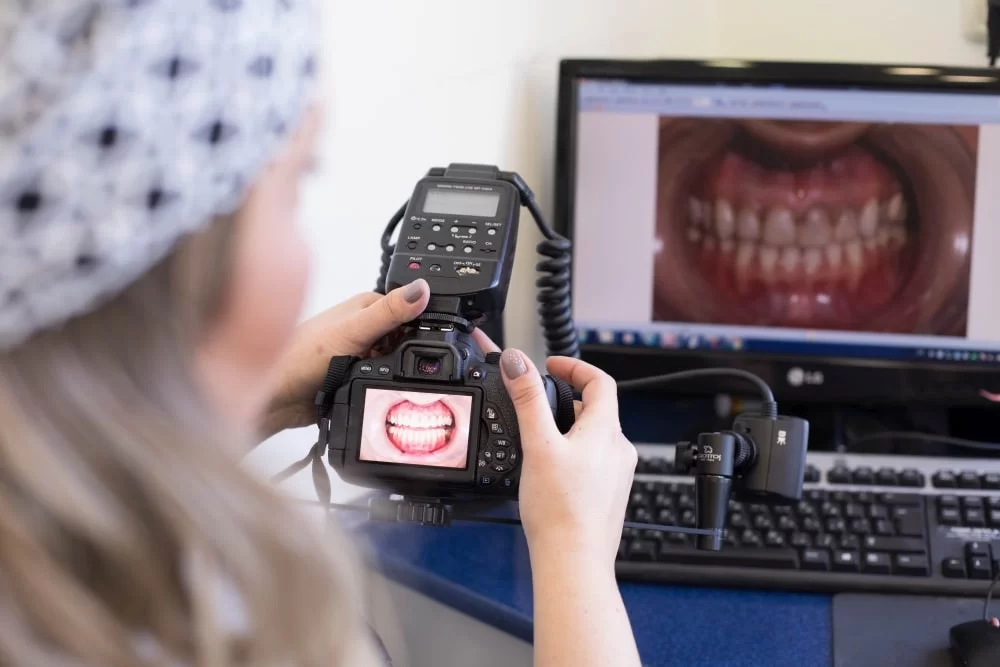
- Comprehensive examination and treatment planning – X-rays, photographs, and sometimes a digital scan of the mouth.
- Visual demonstration of the expected result – Through simulation software or a physical demonstration on the teeth (wax-up or mock-up).
- Tooth preparation – Gentle filing of a thin layer from the tooth surface.
- Fabrication of veneers in a specialist laboratory – According to the specific requirements of the patient and the dentist.
- Fitting check and bonding – Careful fitting of the veneers before final bonding.
- Post-treatment follow-up – Several follow-up appointments to ensure everything is in order and to address any problems that may arise.
At my Jerusalem dental clinic, we adhere to all of these stages and dedicate the time required to each one, to ensure the best possible result.
The price of dental veneers at dental clinics in Israel is admittedly higher than in Turkey and other countries abroad, but it reflects the level of quality, professionalism, and accountability the patient receives. In the long term, it is a worthwhile investment that saves money, time, and suffering.
In summary, it is important to remember that dental veneers are a complex and significant treatment that affects not only the appearance of the smile but also the overall health of the mouth. Choosing a quality, recommended dental clinic in Israel guarantees patients professional, safe treatment and a high-quality aesthetic result that will hold up for many years.
Unlike the temptation of a “good deal” in Turkey, choosing professional treatment in Israel is a smart investment in your health and aesthetics. Click here to contact us and schedule a consultation appointment, where you can receive detailed information about the options available to you and the full treatment process.